
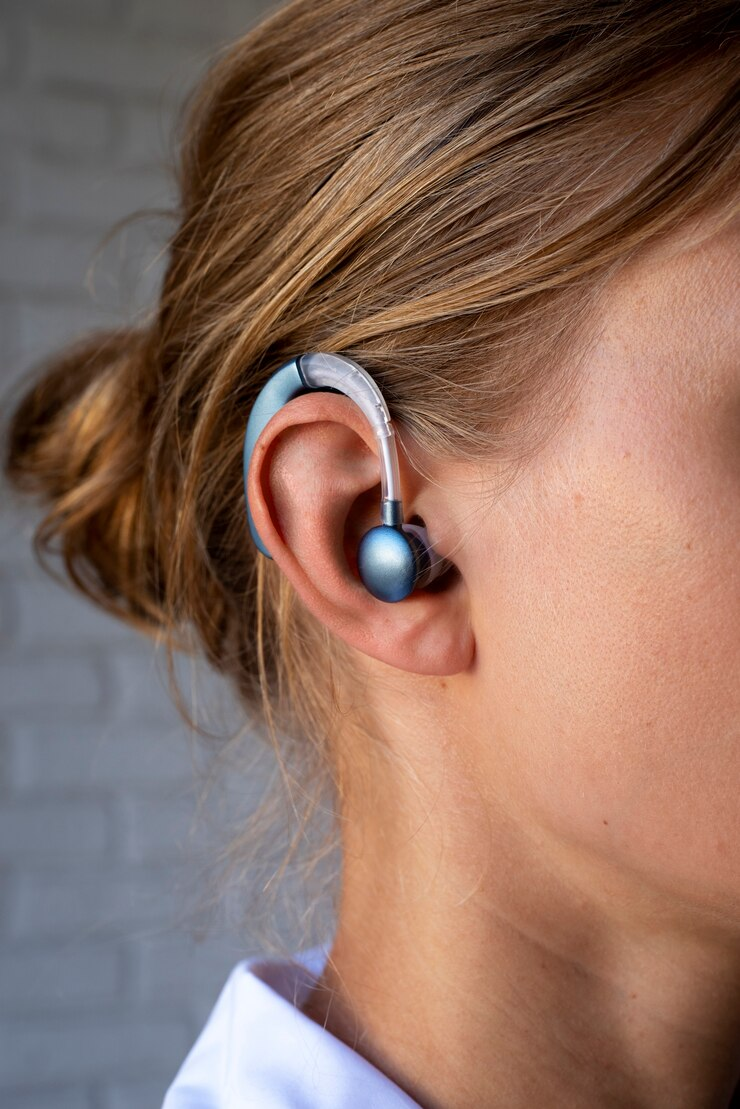
Hearing loss can be a challenging condition to navigate, especially when it affects only one ear or if one ear has a significantly worse hearing capacity than the other. In such cases, CROS (Contralateral Routing of Signal) and BiCROS (Bilateral Contralateral Routing of Signal) hearing aids offer specialized solutions. These hearing aids are designed for individuals with single-sided deafness or those who have asymmetric hearing loss, where one ear is significantly worse than the other.
Both CROS and BiCROS hearing aids in Jaipur help address the challenges associated with hearing loss in one ear, but they work in slightly different ways. Understanding their differences, benefits, and which one is right for your needs is essential to making an informed decision.
1. What Are CROS and BiCROS Hearing Aids?
- CROS Hearing Aids: A CROS hearing aid system is designed for individuals with single-sided deafness (SSD), where one ear has normal or near-normal hearing, and the other ear has no usable hearing. The CROS system works by using a microphone placed on the ear with hearing loss, which picks up sound and transmits it wirelessly to a hearing aid placed in the ear with normal hearing. This helps the wearer hear sounds from both sides, making it easier to localize sounds and have better awareness of the environment.
- BiCROS Hearing Aids: A BiCROS system works similarly to a CROS, but it is used when one ear has no usable hearing, and the other ear has mild to moderate hearing loss. In this case, the sound from the microphone on the ear with no hearing is transmitted to a hearing aid in the ear with some hearing loss. The device amplifies the sound to a level that is audible to the person, helping them hear from both sides, albeit with amplification in the ear with some residual hearing.
2. Key Differences Between CROS and BiCROS Hearing Aids
The primary difference between the two systems lies in the level of hearing in the better ear.
| Feature | CROS Hearing Aids | BiCROS Hearing Aids |
| Suitable for | Single-sided deafness (one ear with no hearing) | One ear with no hearing and the other with mild to moderate hearing loss |
| Amplification | No amplification in the better ear (only routing of sound) | Amplification in the better ear (in addition to routing of sound) |
| Sound Transmission | Sound from the deaf ear is sent to the good ear | Sound from the deaf ear is sent and amplified in the good ear |
| Best for | Individuals with normal hearing in one ear and no hearing in the other | Individuals with hearing loss in both ears, with one ear having no hearing and the other having mild to moderate loss |
3. Who Should Choose CROS Hearing Aids?
CROS hearing aids are ideal for people who have single-sided deafness (SSD). In SSD, one ear has little to no hearing ability, while the other ear has normal or near-normal hearing.
- No amplification needed for the good ear: Since the better ear can hear well, the CROS system doesn’t amplify sound in that ear; instead, it transfers sound from the deaf ear to the better ear.
- Improved awareness of sounds: CROS hearing aids help users localize sounds (such as distinguishing the direction from which sounds are coming). This improves situational awareness, making it easier to follow conversations, hear from different directions, and navigate through noisy environments.
- Eliminates the need for turning the head constantly: Users don’t have to turn their head to hear sounds from the side of the deaf ear, as the sound is transmitted to the ear with hearing.
CROS hearing aids are a great option for people with total hearing loss in one ear who want to restore a sense of hearing in both ears without amplification in the better ear.
4. Who Should Choose BiCROS Hearing Aids?
BiCROS hearing aids are best for individuals who have asymmetric hearing loss, where one ear has no usable hearing (similar to SSD) and the other ear has mild to moderate hearing loss.
- Amplification for the better ear: In BiCROS systems, the better ear is still amplified to some degree. This makes BiCROS suitable for people who have hearing loss in one ear but still need amplification in the other ear.
- Increased clarity: Since the sound from both ears is being transmitted to the better ear and amplified, the user can experience clearer sound from both sides of their head.
- Improved speech comprehension: The BiCROS system helps individuals hear more clearly and understand speech better, especially in situations where background noise is present. Amplification in the ear with mild hearing loss can improve overall clarity.
BiCROS hearing aids are ideal for people who want to restore hearing to both ears (even if one ear has mild to moderate hearing loss) while addressing the need to hear from the side of the deaf ear.
5. Advantages of CROS and BiCROS Hearing Aids
- Improved Sound Localization: Both CROS and BiCROS hearing aids help users determine the direction of sounds, which is crucial for safety (e.g., hearing approaching vehicles) and social interactions (e.g., locating the speaker in a crowded room).
- Better Speech Understanding: CROS and BiCROS systems help in hearing clearer speech, even in noisy environments, by routing sound from the poorer ear to the better ear.
- Natural Hearing Experience: These systems work by routing sound from the deaf or less-hearing ear to the better ear, making the experience more natural and immersive, allowing the user to hear as they would with two fully functioning ears.
- Discreet Design: Both CROS and BiCROS hearing aids are generally small and discreet, fitting inside or behind the ear, ensuring they don’t interfere with the wearer’s appearance.
6. Limitations of CROS and BiCROS Hearing Aids
- Sound Quality: While CROS and BiCROS hearing aids help with localization and clarity, they may not provide the same high-quality amplification as standard hearing aids in both ears, especially in more complex listening environments.
- Not Suitable for Severe Hearing Loss: BiCROS and CROS are most effective for individuals with mild to moderate hearing loss in one ear, and they are less suitable for individuals with profound hearing loss in both ears.
- Dependence on the Good Ear: Since the better ear does all the listening work, users with CROS or BiCROS hearing aids rely heavily on their good ear for hearing. If that ear experiences problems, the functionality of the device can be affected.
7. Which One Should You Choose?
- CROS: If you have a completely deaf ear with normal hearing in the other ear, CROS hearing aids are the right choice. They’ll help you hear sound from your deaf side through the normal ear without the need for amplification in the good ear.
- BiCROS: If you have hearing loss in both ears, but one ear has no hearing and the other has mild to moderate hearing loss, BiCROS hearing aids will be the better option. The system will amplify the sound for your better ear, providing a full hearing experience and ensuring both ears receive sound.
8. Consulting with a Hearing Professional
Both CROS and BiCROS systems require personalized fitting and tuning. A hearing care professional will assess your hearing needs and recommend the best system for your specific condition. They will help you understand which system is right for your hearing profile, lifestyle, and preferences.
If you’re in Jaipur, local hearing aid centers can provide specialized consultations to guide you through the process of selecting the right device. An audiologist will conduct the necessary tests and fit you with a CROS or BiCROS system that optimizes your hearing.
Conclusion
CROS and BiCROS hearing aids are specialized devices designed to help individuals with hearing loss in one ear, improving their ability to hear from both sides. The choice between CROS and BiCROS depends on whether you have a fully deaf ear or mild-to-moderate hearing loss in one ear. While both options offer unique benefits in terms of sound localization and clarity, it’s essential to consult with an audiologist to determine the best fit for your hearing needs. With the right system, you can enjoy a more natural and enriched hearing experience.